2026-10-23 ·
Spray Foam Removal Regulations In Hull Conservation Areas
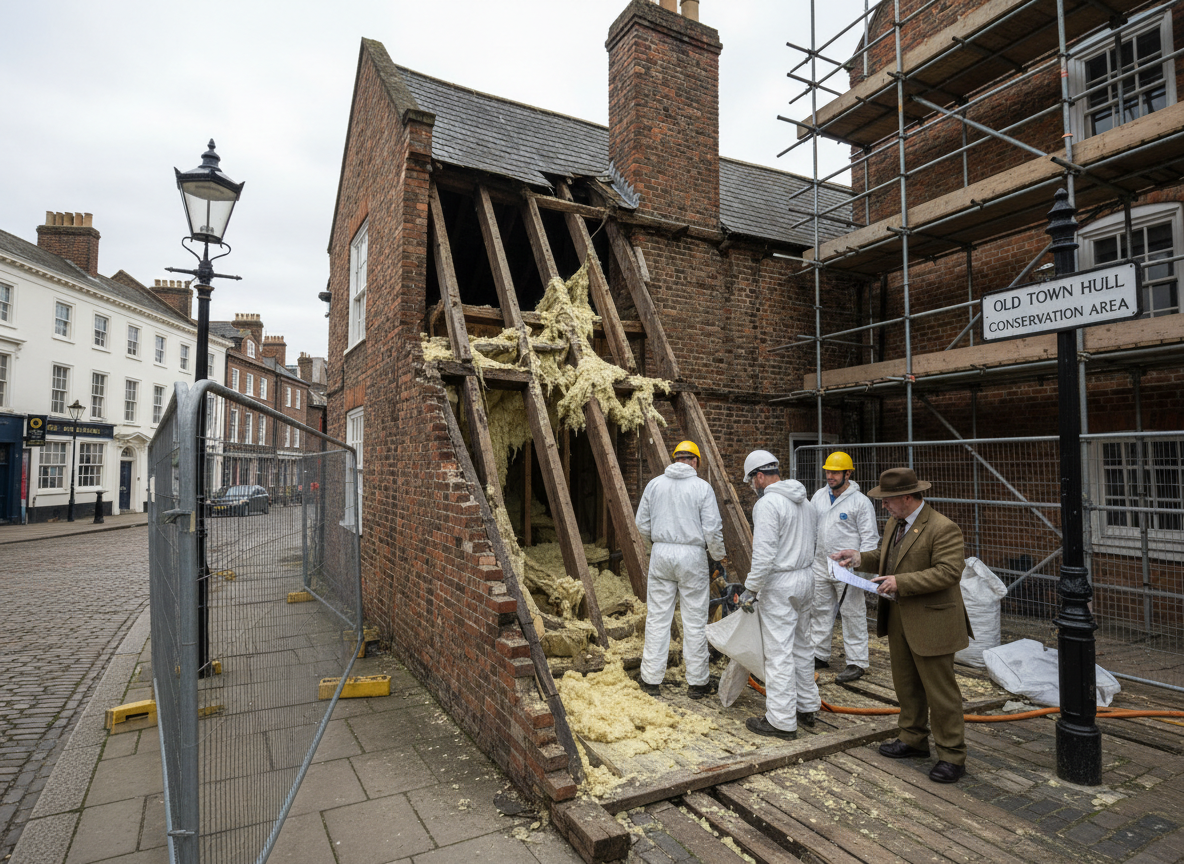
In Hull conservation areas, spray foam removal typically requires prior listed building consent or planning permission from Hull City Council, especially for pre-1919 terraces in the Old Town and surrounding districts. This stems from the need to preserve original roof structures and ventilation paths that closed-cell foam often blocks. Work without approval can trigger enforcement notices that halt projects mid-job and add weeks of delays.
Planning Permission Requirements in Hull Conservation Areas
Hull City Council treats spray foam as an alteration to historic fabric in designated zones such as the Old Town and nearby Georgian streets. Owners must submit a heritage statement detailing how removal will restore breathability without damaging timber joists common in 19th-century builds. Applications usually take 8–12 weeks, and approval often hinges on using non-invasive methods like dry ice blasting to avoid dust migration into adjacent properties. Failure to secure consent before starting can result in retrospective applications that cost more and carry higher refusal risk. Local surveyors familiar with HU1 postcodes note that many mortgage lenders now flag unapproved foam in conservation properties as a valuation issue.
Impact of Local Housing Stock on Removal Methods
Hull’s conservation stock consists mainly of solid-wall terraces and slate-roofed terraces built between 1850 and 1900. These structures have narrow roof voids with limited access points, making standard mechanical removal risky for lath and plaster ceilings below. Seasonal damp from the Humber estuary increases the chance of hidden rot once foam is stripped, requiring moisture mapping before extraction. Crews working in streets around 94 Alfred Gelder Street routinely adapt scaffolding to tight back lanes and coordinate with neighbours to manage noise during 24/7 call-outs. insulation assessment helps identify whether foam sits in lofts or cavity walls before consent applications are drafted.
Compliance Steps for Property Owners
Begin by checking the property’s conservation area status on the Hull City Council interactive map. Next, commission a heritage impact assessment that photographs existing insulation and roof timbers. Submit the application with method statements that specify dust containment and waste disposal routes compliant with local environmental health rules. Once approved, schedule work to avoid peak winter rainfall periods that can flood exposed roof spaces. How To Safely Remove Spray Foam From Your Loft In Yorkshire outlines the sequencing many Hull crews follow. mortgage lender spray foam removal documentation is often prepared at the same time to satisfy lenders who require proof of council sign-off.
Common Pitfalls and How to Avoid Them
Many owners in Willerby and Anlaby conservation fringes start removal without checking whether the foam was installed under a previous listed building consent. This creates a chain of non-compliance that later buyers discover during surveys. Another frequent issue is using abrasive methods that scar historic brickwork visible from the street. Crews mitigate this by containing all debris within sealed chutes and vacuuming daily. Dealing With Damp After Spray Foam Installation In Hull Properties explains why post-removal ventilation upgrades are frequently mandated in approval conditions. Always retain copies of every council letter and photographic record for future property transactions.