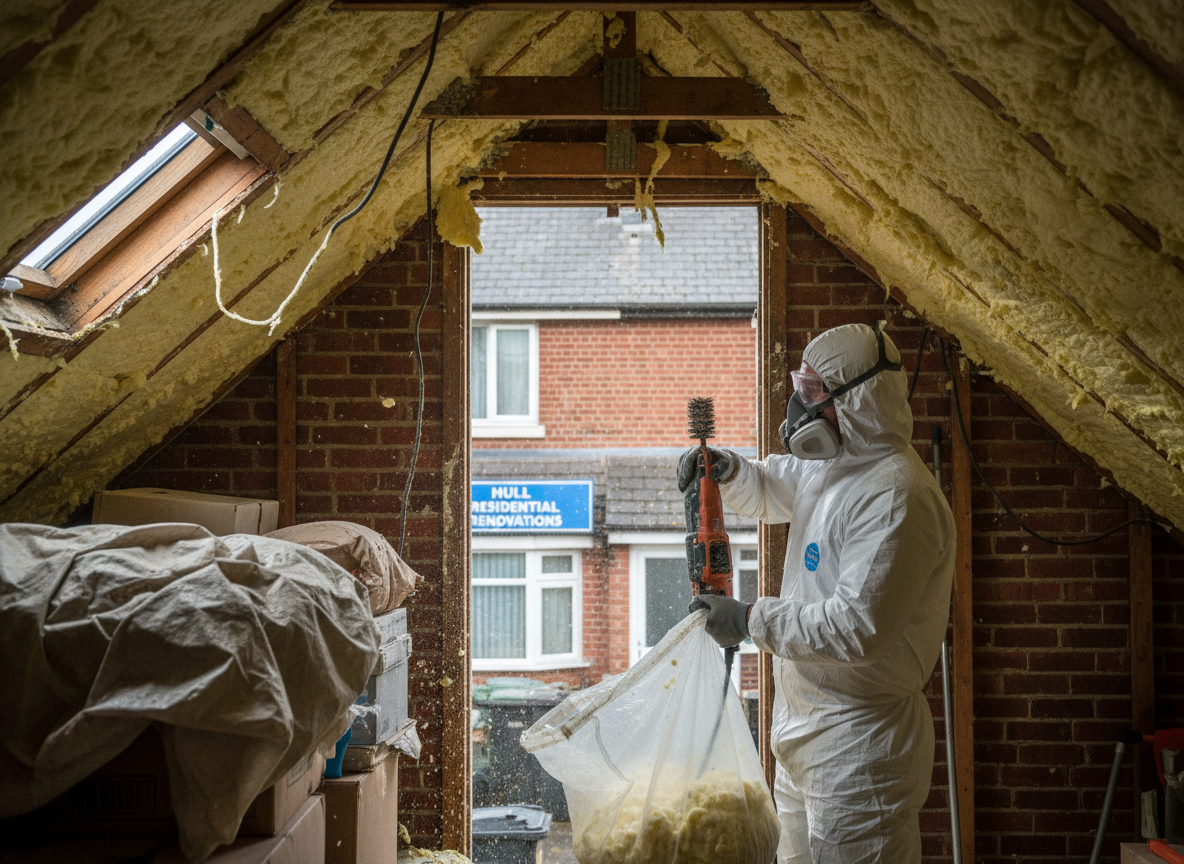
Hull's housing stock is dominated by early twentieth-century terraced and back-to-back properties with solid brick walls and narrow roof voids. Spray foam applied directly to rafters or between joists often seals in the moisture that arrives with the region's frequent easterly winds and driving rain. Removal requires cutting the foam in controlled sections while protecting original timber, then restoring ventilation paths that Building Regulations now expect in unheated roof spaces.
Edge cases frequently encountered include foam that has wicked into lath and plaster ceilings or migrated behind electrical cables in properties around the Avenues and Newland areas. Attempting to pull hardened foam risks tearing original lathe or disturbing asbestos-containing artex ceilings still present in many pre-1980 Hull homes. Technicians therefore work from below with dust extraction and use solvent gels only where mechanical removal cannot reach without damaging historic fabric.
Once the foam is cleared, the roof void must be inspected for rot in rafter feet and wall plates. The persistent high water table and poor drainage in parts of east Hull mean any remaining damp must be allowed to dry before new insulation is considered. Homeowners are advised against re-foaming until gutters, downpipes and ridge ventilation have been checked and repaired.
Common Triggers for Residential Spray Foam Removal
Homeowners in Hull typically call after noticing black mould on bedroom ceilings or after a surveyor flags sealed eaves during a mortgage valuation. Another frequent trigger is the discovery that foam has blocked the small air bricks originally built into gable ends of terraces off Holderness Road.
Technician insight
In Hull, the thing that catches most people out with Residential Spray Foam Removal is the way foam was pumped into the eaves of 1900s terraces without leaving any airflow, so when the winter gales drive rain under the tiles the rafter feet stay permanently wet and rot spreads before anyone notices.
Foam Removal in a Newland Avenue Terrace
Homeowner reported persistent ceiling mould after foam was installed five years earlier. Inspection found foam had bridged the original eaves vents and trapped condensation against the rafters. We removed the foam in sections, restored the vents, and treated the affected timber ends. The loft now maintains airflow and the mould has not returned.
How it works
- 1
Site Survey
Assess roof void access, foam depth, and any hidden timber or cabling in Hull properties.
- 2
Containment Setup
Install dust barriers and negative pressure extraction to protect living spaces below.
- 3
Mechanical Removal
Cut and extract foam in sections while preserving rafters and original ventilation routes.
- 4
Timber Inspection
Check for rot and advise on repairs before the void is left ventilated.
- 5
Clearance and Handover
Remove all debris, confirm airflow, and provide written notes on the condition found.
Pricing
Costs depend on access difficulty, foam thickness and whether timber repairs are required; upfront quotes provided after survey.