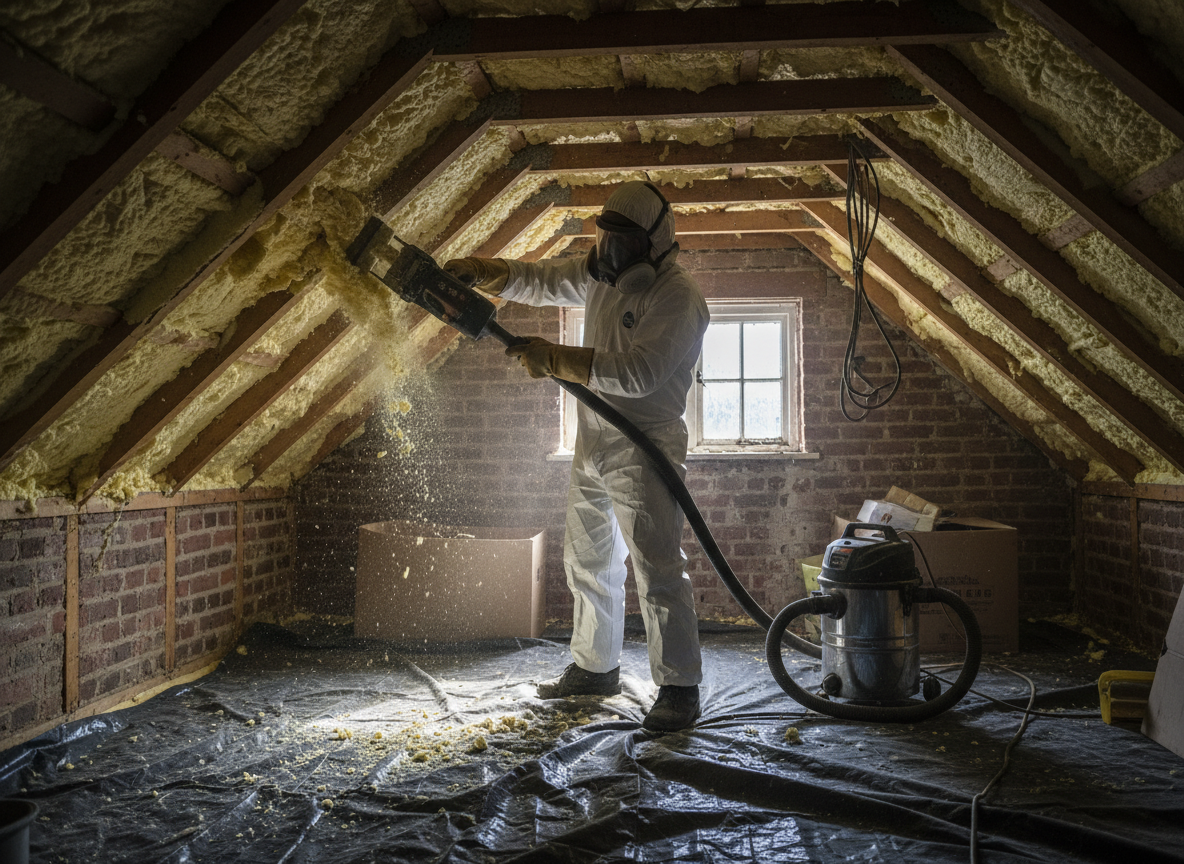
Hull's older terraced houses and Victorian stock along streets near the Humber often have spray foam applied directly to rafters and joists in lofts that were never designed for modern insulation. Removing it requires checking for hidden rot in timber that has sat under trapped moisture for years, especially after repeated winter rainfall. Crews must separate the foam without damaging original lath and plaster ceilings below, then ventilate the space properly before any new insulation goes in.
Winter conditions in the Hull area mean the foam can be more brittle in cold lofts but still clings tightly where previous leaks have introduced damp. Removal teams work around limited access hatches common in post-war semis in neighborhoods like Newland and Sculcoates, using containment sheeting to keep dust out of living areas. After extraction, checking for residual adhesive on brickwork prevents future adhesion issues when homeowners later add breathable insulation.
Local regulations around energy efficiency and listed buildings in central Hull require documenting the original roof structure before any material leaves the property. Technicians note how foam in cavity walls of 1930s homes near the docks can hide corroded wall ties, so inspection includes a moisture meter sweep before cutting begins. Proper disposal of removed foam follows Yorkshire waste rules, avoiding landfill where possible by separating reusable offcuts.
Technician insight
In Hull, the thing that catches most people out with Spray Foam Removal near me is how damp from the Humber seeps into Victorian terraces around the old docks, making foam bond harder to the rafters and forcing extra drying time before you can safely cut it away.
Loft Foam Removal in a Newland Terrace
Homeowner noticed musty smell after heavy autumn rain. Inspection found spray foam trapping moisture against original rafters in a 1900s terrace. We contained the space, removed the foam layer by layer, and ventilated for two days before clearing the site.
How it works
- 1
Initial Inspection
Assess loft or wall access points, check timber condition, and identify any hidden damp in Hull properties.
- 2
Containment Setup
Install dust barriers and negative air to protect living spaces during removal.
- 3
Foam Extraction
Cut and peel foam layers carefully from rafters or cavities without disturbing original structure.
- 4
Cleanup and Ventilation
Remove debris, vacuum residues, and ensure the space dries before handover.
Pricing
Cost depends on access difficulty, foam thickness, and property age; request an upfront quote for your Hull address.