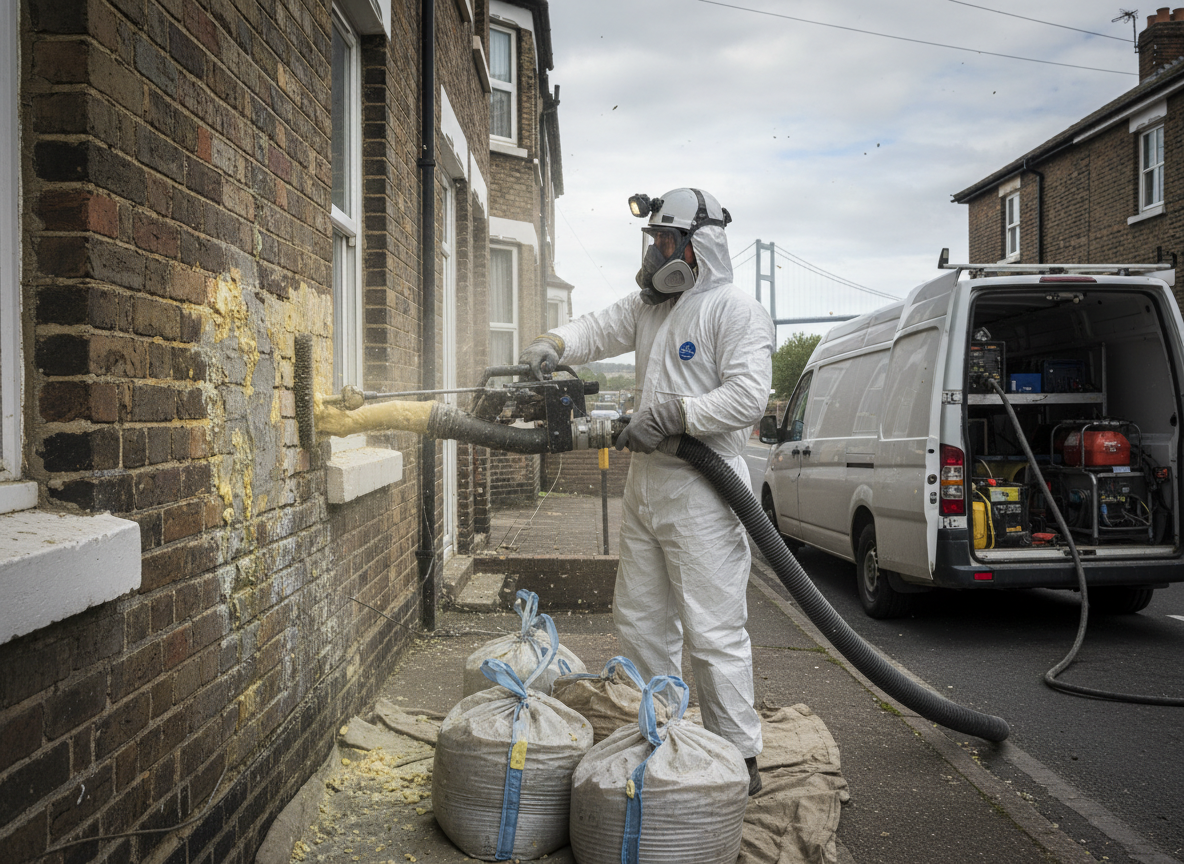
Hull's Victorian and Edwardian terraces, especially around the city centre and near the docks, frequently have cavity foam that was injected in the 1970s and 1980s. Over time the foam absorbs moisture from the Humber's high rainfall and coastal winds, leading to penetrating damp on internal walls. Removal involves drilling access points at regular intervals, using low-pressure extraction tools to pull the material out without cracking the soft red brick or disturbing the original lime mortar. Homeowners often notice black mould or cold spots first in north-facing rooms.
The process must account for Hull's narrow ginnels and terraced layouts where scaffolding access is limited and waste needs to be bagged on site for proper disposal. Any foam left behind can wick water from the ground, particularly in properties built on the area's clay-heavy soil. Experienced teams check for hidden timber lintels and ensure the cavity is left clear so new ventilation or insulation can be considered later. Rushing the job risks leaving residue that restarts the damp cycle within a single winter.
Local building practices in Hull mean many cavities were never designed for modern closed-cell foams. When removal is complete, the walls are left to dry naturally before any redecoration, which can take several weeks in the region's humid conditions. This step prevents recurring issues that are common when contractors skip proper drying time.
Technician insight
In Hull, the thing that catches most people out with Cavity wall spray foam removal is how quickly the region's frequent rain and clay soil push moisture back into any foam residue left behind in Victorian terraces around the city centre and Hessle.
Foam Removal in a City Centre Terrace
Homeowner in a Hull Victorian terrace reported persistent damp on the gable wall after heavy winter rain. Inspection found closed-cell foam blocking weep holes and trapping water against the inner brick skin. We drilled access points, extracted the material in sections and cleared the cavity completely. Walls were left to dry over several weeks before redecoration, stopping the damp recurrence.
How it works
- 1
Initial Cavity Inspection
Survey the property in Hull to locate foam-filled cavities, check for existing damp and note access constraints typical of terraced streets.
- 2
Targeted Drilling and Extraction
Create controlled entry points and use specialist equipment to remove the foam while protecting original brickwork and mortar.
- 3
Cavity Clearance and Drying
Remove all residue, bag waste on site and allow walls to dry before any further works, accounting for Hull's damp weather.
- 4
Final Check and Advice
Inspect the cleared cavity and provide guidance on ventilation or future insulation suited to the property's age and location.
Pricing
Pricing depends on property size, number of cavities and access difficulty in Hull terraces.