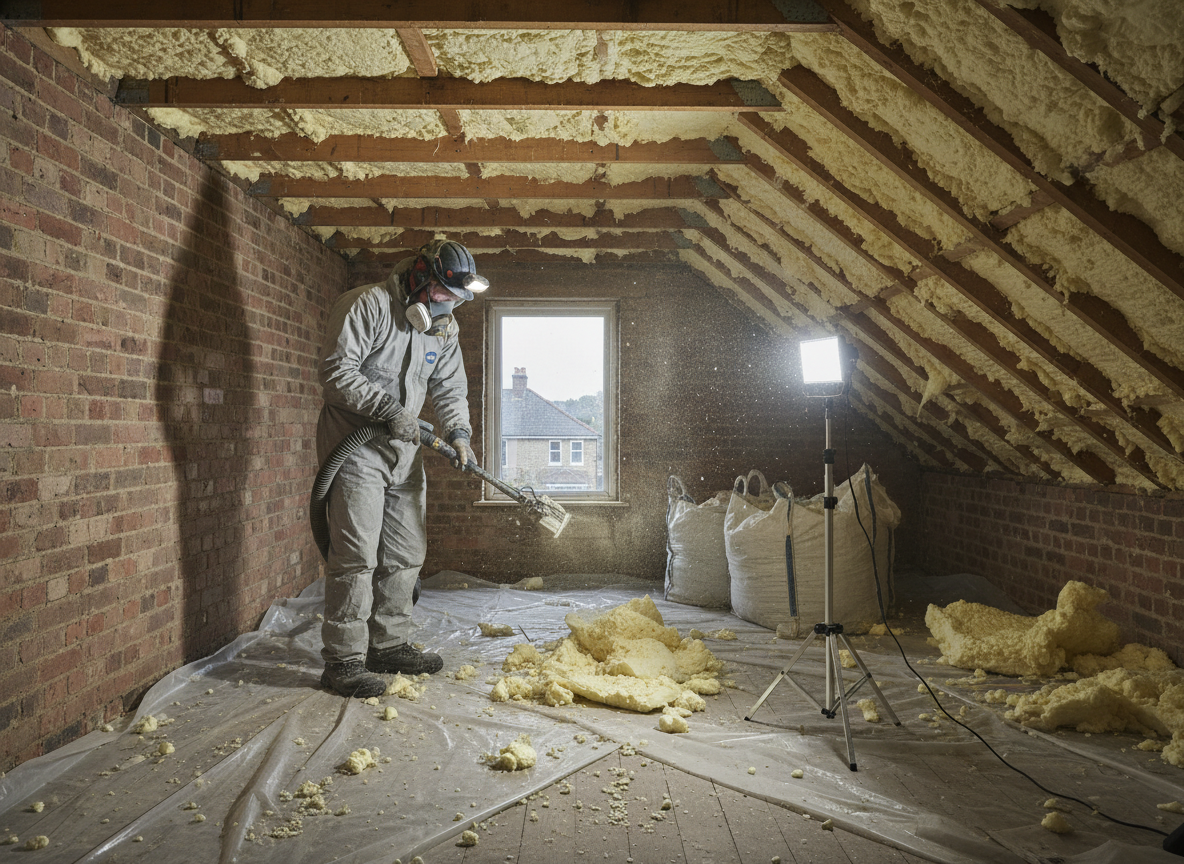
Hull's Victorian and Edwardian terraces often have spray foam applied directly to lath and plaster or between rafters in lofts and cavity walls. Removing it requires separating the foam from fragile substrates without pulling down ceilings or disturbing original timber. The constant humidity from the Humber estuary softens some foams while making others brittle, so technicians test adhesion on site before choosing between mechanical scraping, solvent softening or vacuum extraction.
Edge cases appear regularly in properties near the A63 corridor where previous flood events have left residual moisture behind the foam. This creates hidden mould pockets that must be treated during removal to prevent recurrence. Local building control expects waste to be bagged and disposed of as construction waste; skipping this step risks fines for homeowners. Access through narrow ginnels also dictates whether scaffolding or internal protection is needed first.
Code considerations in the Hull area include checking that any remaining insulation still meets current thermal standards once the foam is gone. Technicians carry moisture meters and thermal cameras to map affected zones before work starts, avoiding unnecessary damage to sound sections. Post-removal ventilation is often adjusted because many terraces rely on the original stack effect that foam previously blocked.
Technician insight
In Hull, the thing that catches most people out with thermal spray foam removal is how the damp air from the Humber estuary makes foam bond differently in pre-1919 terraces compared with drier inland properties; homeowners often try DIY scraping and end up damaging the original lath and plaster that is expensive to replace.
Old Town Terrace Loft Clearance
Problem: foam had been sprayed over original rafters in a 1905 terrace near Hull Marina and was trapping moisture. What we found: hidden mould along the wall plate and foam bonded tightly to fragile lath. What we did: used solvent softening in stages with full containment and extracted everything in one day. Outcome: loft restored to original ventilation, mould treated, and owner able to reinsulate to current standards.
How it works
- 1
Site Assessment
Inspect loft, walls and cavities in the Hull property, noting substrate type, foam thickness and moisture levels.
- 2
Containment Setup
Seal rooms and install dust extraction to protect original features common in East Yorkshire terraces.
- 3
Foam Extraction
Use mechanical and solvent methods suited to local foam types, working in sections to limit substrate stress.
- 4
Clearance and Disposal
Bag all waste, treat any mould found, and dispose of material according to Hull City Council rules.
Pricing
Upfront quotes after inspection; price depends on access difficulty, foam depth and whether mould treatment is required in older Hull stock.